Common Scuba Mistakes Beginners Make: Fix Them Early in Morocco
Every instructor at Chems Diving has stories: the student who skipped the buddy check, the certified diver who held breath on ascent, the traveller who overweighted after a pool course in freshwater Europe. Mistakes are normal; repeating them after correction is what delays certification or ruins fun dives on Mediterranean reefs near Belyounech.
This guide targets Open Water students and early certified divers—not your first 450 DH try dive, which is instructor-led throughout. For try-dive expectations, read beginner first dive Morocco. Here we fix habits before the Strait of Gibraltar conditions expose them on fun dives without a hand-holding professional.
We teach PADI, SSI, and CMAS; fix habits early with links to buoyancy, ears, and signals.
The Essential Rule: Correctable Habits Beat Agency Logos
PADI, SSI, and CMAS share similar safety frameworks through international standards. Students switch agencies thinking a new logo fixes overweighting—it rarely does. Instructor feedback loops matter: centres that rush boats teach shortcuts; centres that reschedule for weather teach patience.
In Morocco, geography amplifies mistakes: Atlantic swell punishes poor buoyancy; calm Belyounech bays forgive it while you learn. Choose training water wisely—see how to choose a dive center and Belyounech sites.
Most mistakes are fixed in real time until skills stick—not hidden until an exam day.
Quick Comparison: Three Mistake Personalities
The rushed descender
Ideal for: nobody—slow down, equalise early, hold the line.
The gear skipper
Ideal for: divers who learn BWRAF until automatic before every dive.
The planner avoider
Ideal for: certified buddies who discuss depth, time, and turn pressure before splash.
Recognise yourself without shame—then practise one fix per dive day.
Mistake: Overweighting and BCD Panic
Sinking fast feels like “needing skill” when you simply carry too much lead. Beginners inflate and dump air constantly, waste tank pressure, and kick up silt that angers photographers and marine life alike. Salt Mediterranean water and rental suits in Morocco change weight needs versus home pools.
Fix it early
- Do proper weight checks with instructor observation
- Read buoyancy control tips for breathing-first habits
- Consider Perfect Buoyancy specialty (2,800–3,500 DH on courses.html) after Open Water
- Protect reefs per responsible diving
SSI Open Water around 4,125 DH, PADI around 5,500 DH, and CMAS around 5,000 DH are investments—buoyancy protects them.
Mistake: Skipping Buddy Checks and Signals
Out-of-air emergencies often start with valves off or empty cylinders nobody noticed because “we dove yesterday.” Hand signals fail when buddies stare at octopus instead of each other every thirty seconds. Multilingual groups around Tangier need explicit briefings—see hand signals guide.
Fix: predive BWRAF every dive, agree ascend signals, stay close in lower visibility after Strait chop. Night diving later demands even stricter habits—night diving Morocco.
Mistake: Fast Descent and Poor Equalization
Racing the bottom to “catch the group” causes ear pain and aborted dives—common on first Mediterranean salt dives after freshwater training abroad. Pain means stop, not push. Link ear equalization; cancel with congestion even if hotel nights are booked.
Chems instructors hold lines in shallow Belyounech zones until ears clear—hiding pain to avoid embarrassment is the dangerous choice, not asking to ascend slightly.
Mistake: Breath-Holding and Rocket Ascents
Holding breath on ascent expands lungs dangerously. Shooting up to the surface without communication risks DCI and barotrauma. Ascend slowly, vent BCD early, follow instructor or guide cadence on fun dives.
Pair with dive insurance and honest medical forms—mistakes plus hidden conditions compound outcomes nobody wants.
Mistake: Poor Dive Planning and Travel Fatigue
Certified beginners treat depth limits like suggestions, skip surface intervals on back-to-back holiday days, and drive three hours from Casablanca after a red-eye flight. Read diving from Casablanca, best time to dive, and cost planning so energy matches ambition.
Use equipment checklist so forgotten mask straps do not become “bad luck.” Families should align schedules with family diving pacing.
Write a simple dive plan on paper or your slate: maximum depth, planned bottom time, turn pressure, and who leads navigation. Review it on the boat in Tangier or Belyounech wind noise before anyone rolls backward off the rib. When ferry schedules from Spain squeeze your week, resist stacking three aggressive dives on day one—Strait visibility and your ears both punish hurry.
Mistake: Touching Bottom, Wildlife, and Gear
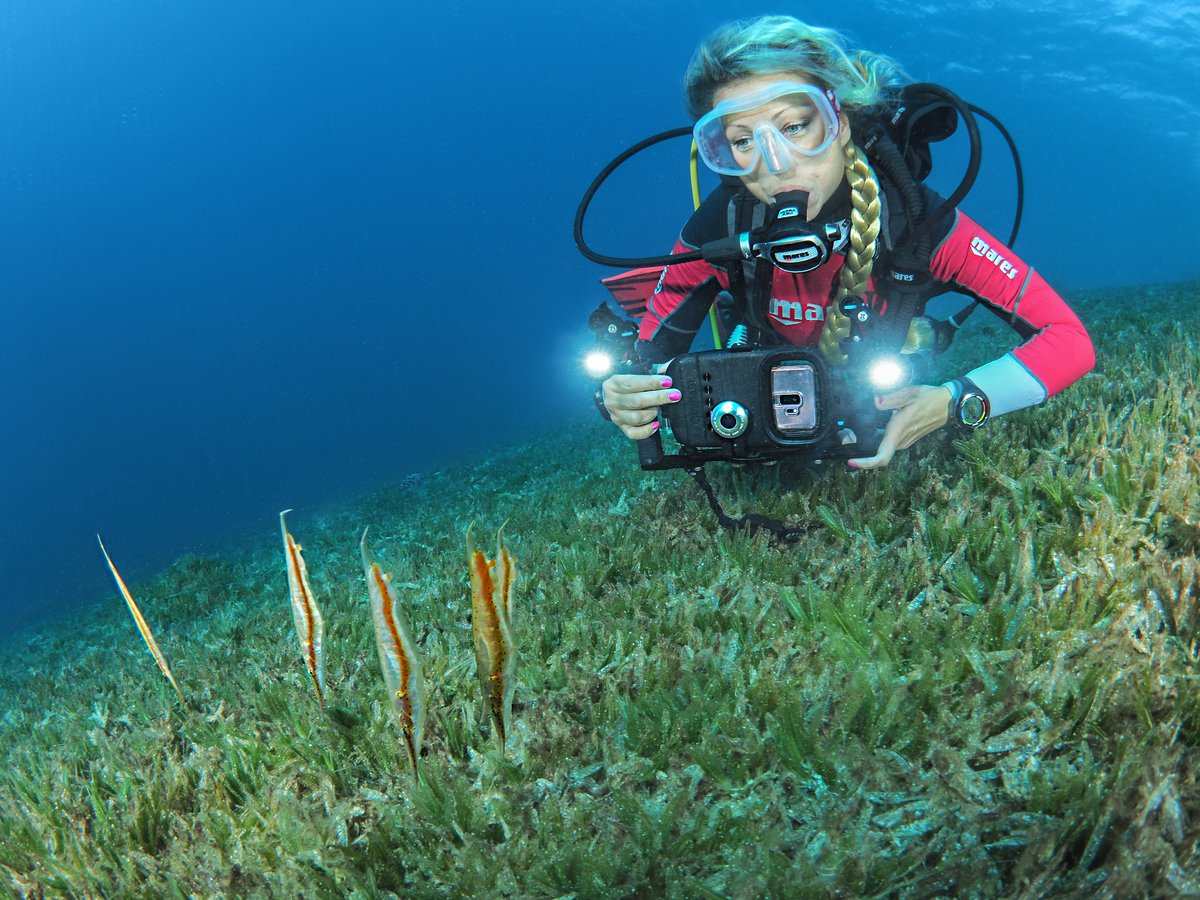
Grabbing rocks for stability, chasing octopus for photos, and kneeling on sand or seagrass are habits instructors correct on day one—but they return when divers feel overweighted or unprepared. Mediterranean sites near Belyounech recover slowly from repeated fin strikes; treat every dive as a guest in a shared neighbourhood described in our conservation guide.
Keep gloves off unless your training requires them for cold—most Moroccan recreational dives do not. Point with an index finger, hover with neutral buoyancy, and ask guides where seasonal wildlife rules apply. Good buoyancy from buoyancy practice removes the urge to crawl along the bottom.
Which Fix Should You Prioritise First?
If you are still in Open Water training, fix equalization pace and buddy checks before buying gadgets.
If you just certified elsewhere but feel sloppy, book guided dives or refresher days at Chems with honest logbook review.
If you plan advanced specialties, stabilise buoyancy and navigation before deep or night profiles.
Patient coaching in calm water beats switching agencies to avoid hearing the same correction twice.
Why Divers Choose Chems Diving in Belyounech
We expect mistakes—we engineer training so corrections stick.
Serious training standards
Dangerous repeats after coaching can delay certification. Most issues clear in confined water before open water exposes them to boat traffic.
Multilingual instruction
Feedback in English, French, Spanish, or Arabic lands faster than frustrated shouting through reg bubbles.
Transparent packages
Specialty and course pricing on courses.html includes context so you can budget fixes like Perfect Buoyancy instead of surprise boat fees.
Weather flexibility
We do not send tired beginners into Strait chop to “get dives done”—reschedule protects learning quality.
Our Honest Recommendation
Admit one weak skill per trip and drill it—buoyancy, ears, or signals—not everything at once.
Train in northern calm bays when possible; Atlantic days are not the place to learn hover.
Message Chems with your logbook if you certified fast elsewhere but feel unprepared—we will recommend refresher or specialties honestly.
Start Your Adventure in Belyounech
WhatsApp your experience level—we fix habits without judgement.
Frequently asked questions
Is this different from the first-dive guide?
Yes—the first-dive guide covers try dives. This page targets certification training and early certified dives when buddy planning and depth limits are your responsibility.
Will instructors fail me for these mistakes?
Repeated dangerous behaviour after correction can delay certification. Most issues are fixed in real time until skills are solid in Belyounech confined and open water sessions.
Can I fix bad habits learned elsewhere?
Often guided dives with feedback or a refresher are enough—contact Chems Diving with your logbook and honest self-assessment via contact or WhatsApp.
Which specialty courses help most?
Perfect Buoyancy, navigation, and rescue training target specific habits. See specialty pricing on courses.html from 2,800–3,500 DH.